Best Time to Visit Spiti Valley
Best Time to Visit Spiti Valley: A Complete Month-by-Month Travel Guide
“Kuch safar manzil ke liye nahi hote… kuch safar khud ko dhoondhne ke liye hote hain.”
And then there is Spiti Valley.
A land of dramatic mountains, ancient monasteries, high-altitude villages, winding roads and landscapes that look almost unreal. Whether you dream of riding through the Himalayas under a blue sky, watching the first snowflakes fall in Kaza, camping near Chandratal, or experiencing a completely frozen Himalayan desert, choosing the best time to visit Spiti Valley can completely change your experience.
So, when should you go?
For most travellers, the best time to visit Spiti Valley is from May to October. If you want comfortable road-trip conditions, accessible attractions and classic Spiti landscapes, the summer and early autumn months are ideal. If your dream is to see a snow-covered, frozen Spiti Valley, then December to March is the season for you—but it requires significantly more preparation and tolerance for extreme cold.
Let's break it down month by month.
Quick Answer: What Is the Best Time to Visit Spiti Valley?
The ideal time depends on what kind of Spiti experience you want.
| Travel Experience | Best Time to Visit Spiti Valley |
|---|---|
| Best overall Spiti trip | May to October |
| Best weather | June to September |
| Best for a road trip | June to October |
| Best for clear mountain views | May-June & September-October |
| Best for greenery & landscapes | June to August |
| Best for Chandratal | June to September/October, subject to road conditions |
| Best for photography | June, September & October |
| Best for snowfall | December to March |
| Best for a winter Spiti expedition | January to March |
| Best for fewer tourists | April-May & October |
| Best for frozen Spiti | January-February |
Himachal Tourism states that Spiti is generally suitable for travel from April to October, while the district administration identifies the broader conventional season as roughly mid-May to mid-October. Winter brings heavy snowfall, sub-zero temperatures and difficult access.
Spiti Valley in Different Seasons
Spiti doesn't have just one personality.
It changes dramatically with the seasons.
Summer Spiti is raw, bright and expansive.
Monsoon Spiti is surprisingly dry compared with many other Himalayan destinations.
Autumn Spiti is golden, crisp and cinematic.
And winter Spiti?
That's when the valley feels like another planet.
Let's explore each season.
Best Time to Visit Spiti Valley: May to October
For first-time visitors, May to October is generally the most practical period to plan a Spiti Valley trip.
During these months, temperatures are relatively manageable, roads are more accessible than in deep winter, and most popular attractions can be explored depending on local weather and road conditions.
The exact experience, however, changes considerably from month to month.
Spiti Valley in May: The Beginning of the Season
May marks the beginning of the main Spiti travel season.
The valley starts waking up after winter, although conditions can still be cold and unpredictable, particularly at higher elevations.
Why visit Spiti in May?
Fewer tourists
Crisp mountain air
Snow can still be seen at higher elevations
Beautiful Himalayan landscapes
Good option for travellers looking for a quieter experience
Excellent time for an early-season road trip when routes are open
May is particularly attractive if you prefer less crowded roads and a more raw Himalayan atmosphere.
However, don't treat May as a guaranteed summer holiday.
Snow and road conditions can still affect routes, especially around high mountain passes.
Is May a good time to visit Spiti Valley?
Yes, for adventurous travellers.
If you want predictable conditions and maximum accessibility, June onwards is generally a safer choice.
Spiti Valley in June: One of the Best Months to Visit
If you ask experienced travellers to pick a month for a classic Spiti road trip, June is one of the strongest choices.
The weather becomes more comfortable, landscapes open up and the valley starts getting busier with road-trip enthusiasts.
This is the month when Spiti starts feeling like the Spiti you see in travel photographs.
Think:
blue skies + massive mountains + winding roads + monasteries + Himalayan villages.
Why visit Spiti in June?
Pleasant daytime conditions
Excellent road-trip atmosphere
Long daylight hours
Mountain passes increasingly accessible, subject to conditions
Great time for photography
Ideal for exploring Kaza, Key Monastery, Langza, Hikkim, Komic and Dhankar
If this is your first Spiti Valley trip, June is a particularly good month to consider.
Spiti Valley in July: Green Valleys and Dramatic Landscapes
July brings a different character to the region.
While much of India experiences monsoon, Spiti lies in the rain-shadow region of the Himalayas, which means it generally receives far less rainfall than many other Himalayan destinations.
That makes July an interesting month for travellers who want to explore the valley while the surrounding Himalayan landscape becomes more vibrant.
Himachal Tourism specifically describes Lahaul-Spiti as an attractive destination during July, August and September because of its relatively dry climate and long travel season.
Why visit Spiti in July?
Pleasant daytime weather
More vibrant landscapes
Good conditions for road trips when routes are open
Great time for trekking and outdoor exploration
Local festivals and cultural experiences may add another dimension to the trip
However, road conditions can still change rapidly because mountain weather does not follow a fixed script.
Spiti Valley in August: Adventure Season
August is another popular month for Spiti Valley.
The combination of high-altitude landscapes, dramatic skies and accessible roads can make this an excellent period for adventure travellers.
It is also a good month for people who want to combine Spiti with experiences such as:
Himalayan road trips
Trekking
Village exploration
Monastery visits
Photography
Camping
Chandratal, when access is open
Is August a good time to visit Spiti Valley?
Yes, especially for adventure and road-trip travellers.
But remember one golden Himalayan rule:
A road that is open today is not a promise that it will be open tomorrow.
Rain, landslides, rockfall, snowfall and local administrative restrictions can change travel plans quickly.
Always check the latest local road status before departure.
Spiti Valley in September: The Sweet Spot
If we had to choose one month for travellers who want a balance between weather, scenery and relatively manageable crowds, September deserves serious consideration.
The skies can be exceptionally clear, the landscape begins transitioning towards autumn and the atmosphere becomes beautifully crisp.
September is also excellent for photography.
Imagine standing in a high-altitude village with golden-brown mountains stretching into the horizon, prayer flags moving in the wind and a sky so blue it almost looks edited.
That's September in Spiti.
Why visit Spiti in September?
Excellent photography conditions
Crisp mountain air
Dramatic landscapes
Fewer peak-season crowds than June-July in many places
Excellent road-trip atmosphere, subject to local conditions
Beautiful autumn colours and golden landscapes
For many travellers, September is arguably the best all-round month for Spiti Valley.
Spiti Valley in October: The Last Great Road-Trip Window
October brings colder nights and a noticeable change in the valley.
The landscapes become more autumnal, the air gets sharper and temperatures start dropping rapidly after sunset.
It can be spectacular—but you need to prepare for cold.
Why visit Spiti in October?
Fewer tourists
Excellent mountain photography
Crisp skies
Autumn landscapes
Peaceful monasteries and villages
A more secluded Himalayan experience
The important caveat is road accessibility.
High-altitude routes can become unpredictable as winter approaches, so don't book an October itinerary without checking the latest local conditions.
Best Time to Visit Spiti Valley for Snow: December to March
Now we enter another world.
If summer Spiti is a road-trip movie, winter Spiti is the director's cut.
Snow-covered villages.
Frozen rivers.
White mountains.
Smoke rising from tiny homestays.
Monasteries surrounded by silence.
And temperatures that can become seriously cold.
According to Himachal Tourism, temperatures in deep winter can fall to around −20°C in some places.
This is not a normal holiday.
It is an expedition.
Spiti Valley in December: Winter Begins
December marks the transition into deep winter.
Snowfall can transform the landscape, but road access becomes much more challenging.
If you're planning a winter Spiti trip, proper clothing, vehicle preparation, experienced local coordination and contingency planning become extremely important.
Best for:
Snow lovers
Adventure travellers
Photographers
Experienced Himalayan travellers
People looking for an offbeat winter experience
Spiti Valley in January: Frozen Paradise
January is one of the most dramatic months to experience winter Spiti.
The valley can become heavily snow-covered, temperatures can plunge well below freezing and parts of the landscape may appear completely frozen.
This is when places such as Kaza, Langza, Hikkim and Komic can look like scenes from a Himalayan fantasy film.
But is January safe for everyone?
No.
Winter Spiti is not suitable for travellers who expect conventional tourist infrastructure and predictable road conditions.
You need to be prepared for:
Extreme cold
Snow-covered roads
Road closures
Delays
Limited services
Changing weather
High-altitude conditions
The reward?
A Spiti Valley that most summer tourists never see.
Spiti Valley in February: For the True Snow Chasers
February continues the deep-winter experience.
If your primary goal is snow-covered Spiti, February can be spectacular.
The landscape is at its most dramatic, but the same challenges remain.
This is not the month to plan a spontaneous self-drive trip without understanding Himalayan winter conditions.
Instead, consider travelling with an experienced operator that understands the route, accommodation availability, weather changes and emergency logistics.
Spiti Valley in March: Winter Meets Spring
March begins the transition towards spring, although winter conditions can still dominate at high elevations.
For travellers interested in snow but wanting to move towards slightly more manageable conditions, March can be an interesting option.
The exact experience varies considerably from year to year depending on snowfall and road conditions.
Which Month Is Best for Spiti Valley?
Here's the simple answer:
For first-time travellers:
June to September
For the best overall balance:
September
For a classic summer road trip:
June to August
For photography:
June, September and October
For snow:
January to March
For fewer tourists:
May and October
For a serious winter adventure:
January and February
Best Time to Visit Spiti Valley for a Road Trip
Spiti is famous for its roads.
But let's be clear:
The road is not just a way to reach Spiti. The road is part of the experience.
You'll encounter:
High mountain passes
Narrow roads
Rocky terrain
River crossings
Dramatic cliffs
Remote villages
Changing weather
Long stretches without major facilities
For a conventional Spiti road trip, the May/June to October window is generally more practical, while the exact route and accessibility depend on current road and weather conditions.
The Shimla–Kinnaur–Tabo–Kaza approach and the Manali–Kunzum–Kaza approach can have very different seasonal characteristics.
Shimla to Spiti vs Manali to Spiti: Which Route Is Better?
There isn't one universal answer.
Shimla – Kinnaur – Tabo – Kaza
This route is generally preferred by many first-time travellers because it allows a more gradual progression into high altitude.
A typical route may include:
Shimla → Sarahan → Sangla/Chitkul → Nako → Tabo → Dhankar → Kaza
Advantages
Gradual altitude gain
Incredible Kinnaur landscapes
Chitkul can be added
Tabo and Dhankar on the way
Excellent option for a longer Himalayan journey
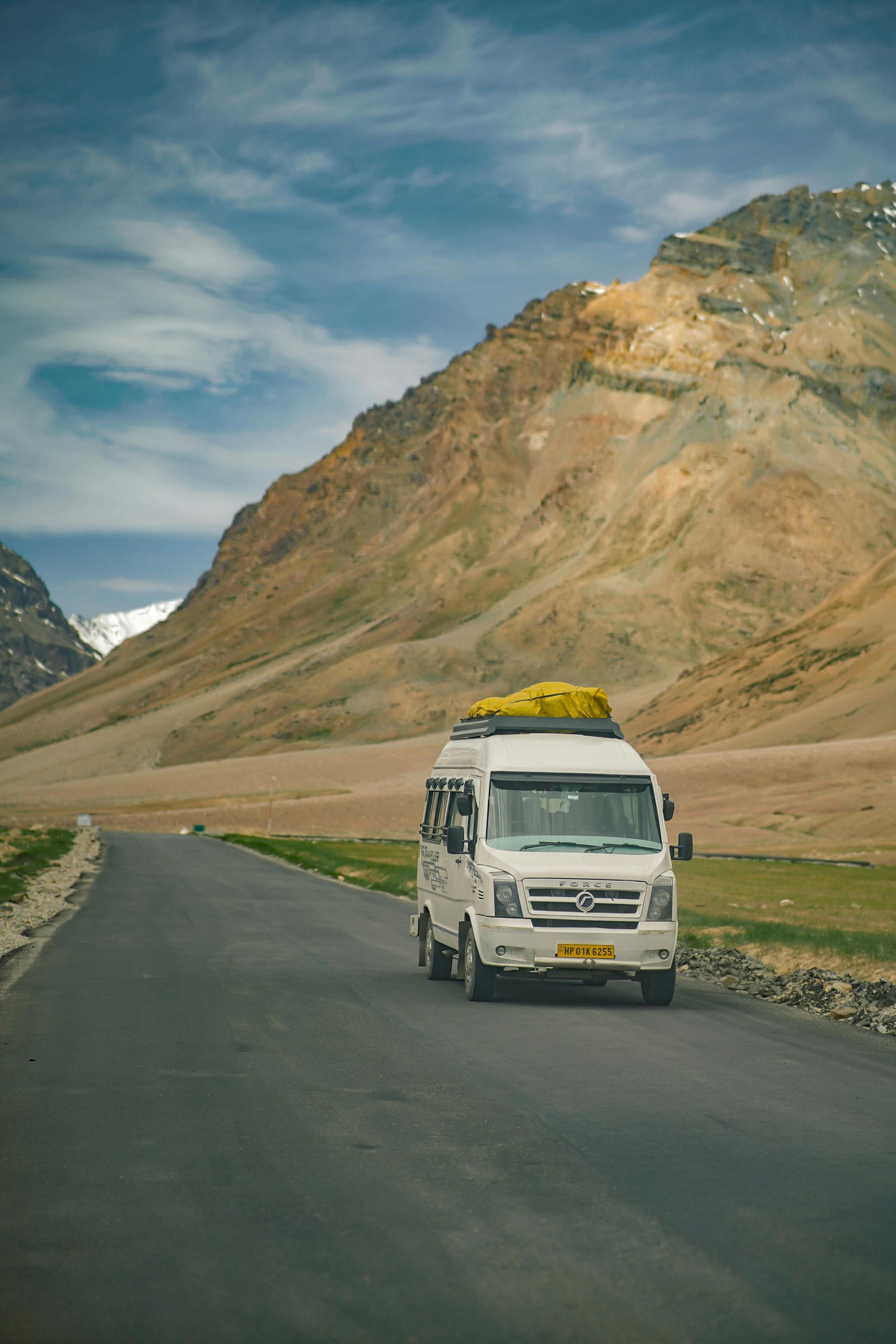
Manali – Atal Tunnel – Kunzum – Kaza
This route offers a more dramatic high-altitude approach.
A typical journey may include:
Manali → Atal Tunnel → Sissu → Gramphoo → Kunzum Pass → Losar → Kaza
Advantages
Dramatic mountain scenery
Kunzum Pass
Access towards Chandratal when the route is open
More direct approach from Manali
Important
The Manali–Kaza route depends heavily on high-altitude road conditions, particularly around Kunzum Pass and the Batal/Gramphoo section.
Always check the latest official road status before travelling.
Best Time to Visit Chandratal Lake
Chandratal, also known as the Lake of the Moon, is one of the most iconic attractions associated with a Spiti road trip.
The lake sits at a high altitude and access is seasonal.
Himachal Tourism notes that the camping season around Chandratal is generally associated with the summer-to-autumn period, roughly June to October, subject to access and local conditions.
The lake is especially beautiful when surrounded by clear blue skies and high Himalayan peaks.
Best months for Chandratal:
June to September
October can also be possible depending on road and weather conditions.
Best Time to Visit Spiti Valley for Snowfall
If your Google search was:
“When does it snow in Spiti Valley?”
The answer is broadly:
Winter, particularly December to March.
But there is an important distinction between snowfall and snow-covered landscapes.
You may not see active snowfall every day.
What winter travellers usually chase is the larger experience:
snow-covered mountains + frozen landscapes + winter villages + sub-zero temperatures.
For that, January and February are particularly attractive.
Best Time to Visit Spiti Valley for Photography
Spiti is a photographer's dream almost all year—but different seasons produce completely different frames.
June
Bright skies, snow patches and dramatic mountain contrast.
July-August
More variation in landscape and atmospheric conditions.
September
Crisp skies, golden landscapes and excellent visibility.
October
Autumn tones and a colder, more dramatic atmosphere.
January-February
Snow-covered villages and monochrome Himalayan landscapes.
If you're chasing Instagram-worthy Spiti, September and winter offer two completely different visual identities.
Best Time to Visit Spiti Valley for Families
For families, the question isn't simply “Which month has the best weather?”
The better question is:
Which month provides the best combination of road accessibility, manageable temperatures, accommodation and overall comfort?
For many families, June to September is a more practical choice than deep winter.
Families should also consider:
Travel duration
Altitude
Medical preparedness
Vehicle comfort
Accommodation standards
Children's ability to handle long mountain drives
Flexibility in case of road closures
Spiti is beautiful, but it is not a conventional hill-station holiday.
Best Time to Visit Spiti Valley for Couples
For couples looking for a memorable Himalayan escape, September and October offer a particularly cinematic atmosphere.
Less rush.
Cold mountain evenings.
Quiet monasteries.
Golden landscapes.
Long drives with nowhere to be except the next mountain bend.
And if you're the adventurous kind, winter Spiti takes the romance several degrees below zero—literally.
Spiti Valley Weather: What Should You Expect?
Spiti is a high-altitude cold desert.
That means the temperature can change dramatically between day and night.
Even during the warmer months, nights can be cold.
Himachal Tourism specifically recommends carrying warm clothing because temperatures can drop suddenly, and it recommends heavy woollens by September.
General seasonal pattern
April-May: Cold, early-season conditions
June: Pleasant days, cold nights
July-August: Relatively pleasant, dry high-altitude climate
September: Crisp days and cold evenings
October: Cold, especially at night
November-March: Deep winter and potentially extreme cold
Do not pack for Spiti based solely on the daytime forecast.
Pack for the night.
Is Monsoon a Good Time to Visit Spiti Valley?
This is where Spiti differs from many Himalayan destinations.
Because Spiti lies in a rain-shadow region, it generally receives much less monsoon rainfall than places on the southern side of the Himalayas.
That makes July and August viable travel months.
However, getting to Spiti still involves roads through other regions where monsoon-related landslides, rockfall and road disruptions can occur.
So the right question isn't:
“Does it rain in Spiti?”
It is:
“What are the road conditions along my entire route?”
That distinction matters.
How Many Days Are Enough for Spiti Valley?
For a proper Spiti Valley road trip, avoid trying to squeeze everything into a rushed itinerary.
A 7–10 day trip is a reasonable starting point depending on your route and starting city.
A longer trip allows you to experience more of:
Kaza
Key Monastery
Kibber
Chicham
Langza
Hikkim
Komic
Dhankar
Tabo
Pin Valley
Chandratal
Chitkul
Sangla
Remember: Spiti is not a destination where you should measure the trip only in kilometres.
Altitude, road conditions and acclimatisation matter more than distance.
Things to Keep in Mind Before Visiting Spiti Valley
1. Check road conditions
Mountain roads can change quickly.
Check official road-status information close to your departure date.
2. Don't underestimate altitude
Kaza and surrounding destinations are at high altitude.
Give your body time to acclimatise.
3. Carry proper winter clothing
Even summer nights can be surprisingly cold.
4. Keep cash
Remote areas may have limited connectivity and payment infrastructure.
5. Don't overpack
But don't compromise on warm layers.
6. Keep buffer days
A Himalayan road trip should never be planned with zero flexibility.
7. Respect local communities
Spiti isn't just a tourist landscape. It is home to centuries-old Buddhist culture, monasteries and traditional communities.
Travel respectfully.
What to Pack for Spiti Valley
Your packing list should change depending on the season.
Essentials
Thermal innerwear
Fleece jacket
Heavy down jacket
Waterproof/windproof outer layer
Warm socks
Gloves
Woollen cap
Sunglasses
Sunscreen
Lip balm
Comfortable trekking shoes
Power bank
Personal medicines
Basic first-aid kit
Reusable water bottle
Identity documents
Cash
For winter Spiti
Add:
Heavy-duty winter jacket
Extra thermal layers
Insulated gloves
Multiple warm socks
Neck warmer
Better insulated footwear
Personal emergency supplies
Is Spiti Valley Worth Visiting in Winter?
Absolutely—but only if you understand what you're signing up for.
Winter Spiti isn't about comfort.
It is about experiencing the Himalayas in their most extreme and surreal form.
The river freezes.
The villages turn white.
Roads become an adventure.
The temperature drops.
And the silence becomes almost cinematic.
If your idea of a holiday is a luxury resort and easy sightseeing, choose summer.
If your idea of a holiday is:
“Let's go where the map gets quiet.”
Then winter Spiti might be calling.
Best Time to Visit Spiti Valley: Final Verdict
There is no single “best” month for everyone.
The right season depends on the story you want your trip to tell.
Want the classic Spiti road trip?
Go between June and September.
Want the best balance of scenery, weather and fewer crowds?
Consider September.
Want snow-covered Spiti?
Choose January to March.
Want a quieter Himalayan experience?
Look at May or October, subject to road conditions.
Want the ultimate winter adventure?
Plan a properly organised winter Spiti expedition.
Because Spiti isn't just a place you visit.
It's a place you survive, experience, photograph, remember—and eventually miss.
And perhaps that's why people return.
Planning Your Spiti Valley Trip?
If you don't want to spend weeks figuring out routes, stays, transport, permits, altitude planning and logistics, a professionally organised expedition can make the experience significantly smoother.
For travellers looking for the snow-covered version of Spiti, goSelective Travels offers a Winter Spiti Valley Expedition 2026 from Delhi, featuring a multi-day Himalayan road-trip itinerary covering destinations such as Tabo, Dhankar, Kaza, Langza, Hikkim and Komic.
Use promo code FLAT999 while booking to get a flat ₹999 discount.
Ready for your Spiti story?
Pack warm. Keep your camera ready. And let the mountains write the rest.
Frequently Asked Questions About Spiti Valley
What is the best time to visit Spiti Valley?
The best overall period is generally May to October, with June to September being particularly popular for conventional road trips. For winter snow experiences, January to March is more suitable.
Which month is best for Spiti Valley?
September is one of the best all-round choices for travellers looking for crisp weather, dramatic landscapes, photography and a comparatively quieter experience.
Can I visit Spiti Valley in winter?
Yes. Winter Spiti is possible, but conditions can be extreme. Snow, sub-zero temperatures and road closures are part of the experience. Travel with appropriate preparation and experienced local support.
Is Spiti Valley open in December?
Spiti can be accessed in winter, but routes and destinations may have seasonal restrictions or closures. Road conditions must be checked immediately before travelling.
Is Spiti Valley open in January?
Winter travel to Spiti is possible, but it is an expedition-style journey rather than a conventional holiday. Weather and road conditions can change quickly.
Does it snow in Spiti Valley?
Yes. Winter brings significant snowfall to parts of Spiti, and temperatures can fall well below freezing.
Is July a good time to visit Spiti Valley?
Yes. July is part of the main travel season, and Spiti's rain-shadow climate makes it considerably drier than many other Himalayan destinations. However, road conditions along the approach routes should always be checked.
Is August a good time to visit Spiti Valley?
Yes. August is suitable for road trips and adventure travel when routes are open, although weather-related disruptions can still occur.
Is September a good time to visit Spiti Valley?
Yes. September is widely considered one of the strongest months for a Spiti road trip because of crisp weather, dramatic landscapes and excellent photography conditions.
Can I visit Chandratal with Spiti Valley?
Yes, Chandratal can be included during the appropriate travel season, subject to road and weather conditions. Access is seasonal.
How many days do I need for Spiti Valley?
A properly paced Spiti trip generally requires around 7–10 days or more, depending on your starting point, route and number of destinations.
Is Spiti Valley safe for first-time travellers?
It can be, provided you respect the altitude, road conditions and weather. First-time travellers should avoid rushing the itinerary and should have a sensible acclimatisation and emergency plan.
Which is better: Shimla to Spiti or Manali to Spiti?
The Shimla route generally provides a more gradual approach to high altitude, while the Manali route offers a dramatic high-altitude approach through Kunzum Pass when open. The better option depends on your itinerary, season and current road conditions.
What is the coldest month in Spiti Valley?
January and February are among the coldest months, with some locations experiencing temperatures around or below −20°C.
What is the best time for a Spiti Valley bike trip?
For most riders, the main riding season is generally June to September, subject to road and weather conditions. Winter riding requires significantly more experience and specialist preparation.
Final Word
Summer Spiti shows you the mountains.
Winter Spiti shows you their soul.
Choose your season wisely.

goSelective Travels NAgpur
goSelective Travels specializes in Himachal Pradesh tours, including Manali, Shimla, Kasol, Solang Valley, and Spiti. Our local expertise helps travelers avoid common mistakes such as overpacked itineraries or unsafe winter routes.

Winter Spiti Valley: A Complete Travel Guide to the Frozen Paradise 2026

Why Choose goSelective Travels | Trusted Himachal Tour Experts

Leh Ladakh Trip 2026: The Ultimate Guide for Family, Friends & Corporate Groups